

Stop Shopping by Brand First: Choose the Vehicle Your Life Actually Needs
Most people begin vehicle shopping in the wrong place.
They start with a badge.
“I want a Ford.”
“I have always driven a Jeep.”
“I am a truck person.”
“My family has always owned this brand.”
Brand loyalty can be valuable. Familiar controls, previous ownership experience, trusted service, resale history, styling preferences, and manufacturer reputation all matter.
But none of those things should come before the most important question:
What job does your next vehicle actually need to perform?
That question is especially useful around Junction City because drivers here live very different versions of Kansas life. One person commutes to Fort Riley. Another works in agriculture. Another drives to Manhattan daily. Another has three children and a dog. Another wants to tow to Milford Lake. Another is buying a first vehicle. Another spends weekends renovating a house. Another simply wants something comfortable for I-70.
Those owners should not all start shopping in the same category.
Step One: Stop Thinking About Vehicles and Start Thinking About Your Week
Before looking at inventory, write down what your vehicle actually does over seven days.
Not what you imagine it doing. Not what a commercial shows. What it really does.
Monday might involve a Fort Riley commute. Tuesday includes school pickup. Wednesday requires a run to Manhattan. Thursday means groceries and sports practice. Friday brings four passengers. Saturday involves a home project. Sunday may include a drive to Milford Lake.
Now count the situations your current vehicle handles well and the situations where it creates friction.
Friction is one of the most useful concepts in vehicle shopping.
Maybe loading children is difficult. Maybe your truck is too large for what you actually do. Maybe your SUV cannot tow the camper you want. Maybe you constantly lower seats to fit cargo. Maybe your sedan is inexpensive to operate but no longer fits your family. Maybe you are paying for capability you have not used in years.
Those frustrations are better shopping clues than brand preference.
Step Two: Decide Whether You Need a Truck, SUV, Family Vehicle, or Something Smaller
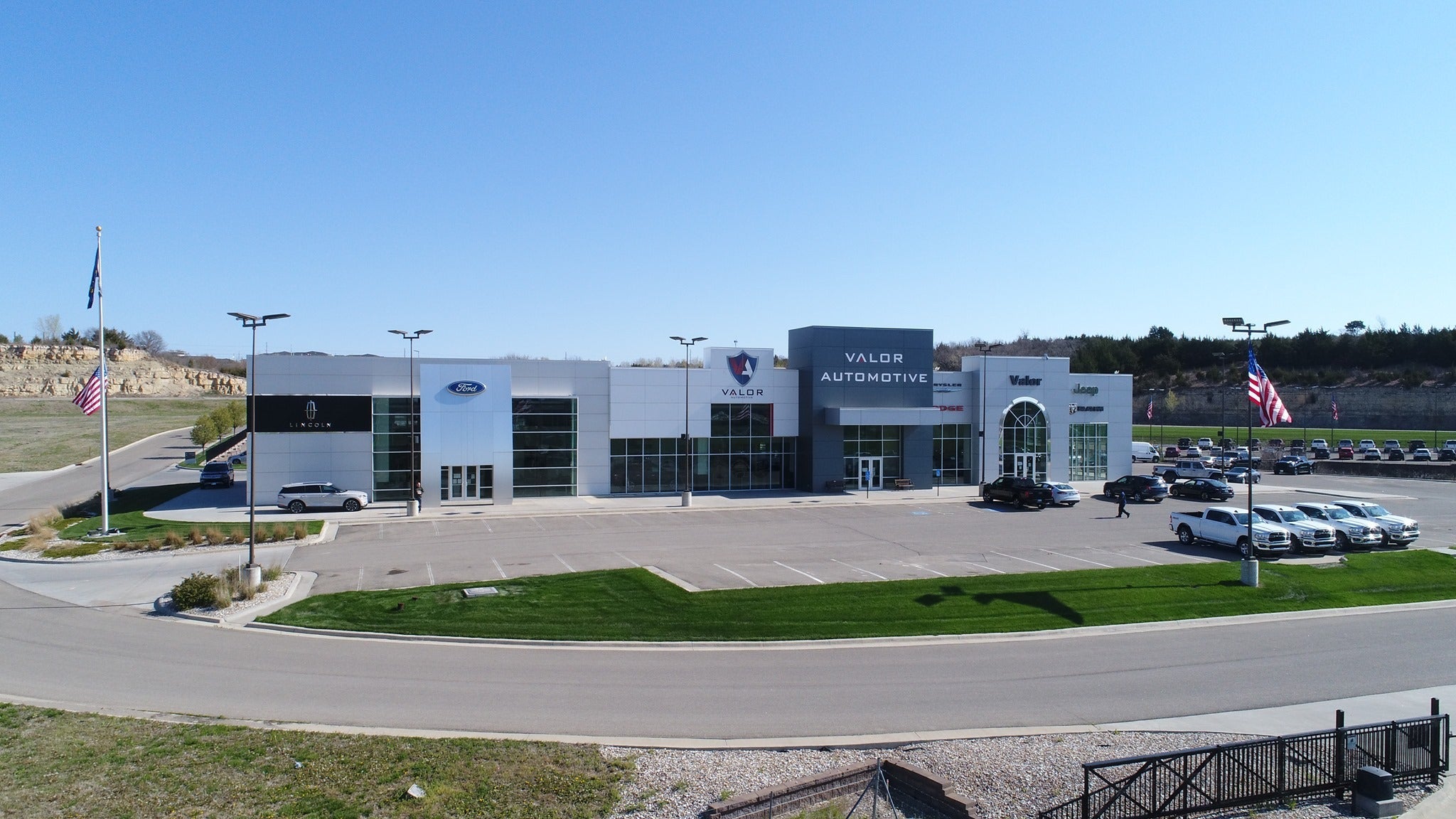
Valor Automotive Group gives Junction City shoppers access to Ford, Chrysler, Dodge, Jeep, and Ram vehicles, which makes body-style decisions more interesting because you can examine different solutions without forcing your needs into one manufacturer’s lineup.
The Valor Automotive Group website allows shoppers to begin across multiple brands, while the group’s new vehicle inventory and used vehicle inventory broaden the comparison further.
Choose a truck when open-bed utility or towing repeatedly matters
A Ford F-150, Maverick, Ranger, Super Duty, Ram 1500, or Ram Heavy Duty may fit when your life regularly includes towing, dirty cargo, building materials, tools, recreational equipment, agricultural work, or property projects.
The key word is regularly.
Do not buy a truck because you needed one once last year. Buy one because having one available changes your normal life enough to matter.
Choose an SUV when passenger flexibility and enclosed cargo dominate
Vehicles such as the Ford Escape, Bronco, Explorer, Expedition, Jeep Wrangler, Jeep Grand Cherokee, or larger Jeep utility vehicles serve different versions of the SUV customer.
Some emphasize efficiency and commuting. Some prioritize three-row space. Some emphasize outdoor capability. Others focus more heavily on highway comfort.
“SUV” is no longer a useful final decision. It is only the beginning of the decision.
Choose a family-focused vehicle when access and interior flexibility are the priority
A Chrysler Pacifica can make more sense than either a traditional SUV or pickup for a household whose primary challenges involve children, passengers, luggage, school activities, airport trips, and road travel.
The sliding doors and interior packaging of a minivan solve problems that horsepower and ground clearance cannot.
The point is not that a minivan is better.
It is that the right answer often becomes obvious once you identify the actual problem.
Step Three: Separate Needs From Preferences
This exercise prevents expensive mistakes.
Create two columns.
Needs:
- Seats six people
- Tows a specific trailer
- Fits inside the garage
- Handles a daily 60-mile commute
- Provides room for two child seats
- Carries tools or equipment
Preferences:
- Panoramic roof
- Leather seating
- Large wheels
- Specific exterior color
- High-performance engine
- Premium audio
Preferences are important. You should like a vehicle you may own for years.
But a vehicle that satisfies preferences while failing a major need becomes frustrating quickly.
Step Four: Think About the Twenty Percent of Driving That Matters Most
Most miles may be ordinary, but not every mile has equal importance.
A family may spend 80 percent of its driving time around Junction City but still choose a larger vehicle because several long road trips each year are important. A homeowner may rarely fill a truck bed, but the weekends when it is filled are the reason the truck exists. A Jeep owner may travel almost entirely on pavement but value the small percentage of trips involving gravel, snow, trails, or outdoor recreation.
This is why averages alone do not tell the full story.
Ask which driving situations would be most difficult if your next vehicle could not handle them.
That exposes true requirements.
Step Five: Buy for the Next Few Years, Not Only Today
Vehicles stay in households longer than many purchase decisions account for.
The perfect vehicle for February 2026 may feel very different in 2029 if your life changes.
Think about likely changes:
- Children getting older
- A growing family
- Teen drivers
- Career changes
- Moving on or off Fort Riley
- Buying a home
- Purchasing recreational equipment
- Working remotely
- Changing commute length
- Taking more road trips
You cannot predict everything, but you can avoid choosing a vehicle with no room for foreseeable changes.
Step Six: Compare Total Ownership, Not Just Monthly Payment
Monthly payment is important because the vehicle must fit your household budget.
But comparing vehicles exclusively through payment can disguise meaningful differences.
Total ownership includes fuel, insurance, tires, routine service, expected maintenance, depreciation, registration, financing cost, and the expenses a vehicle may eliminate.
A truck may cost more to fuel but reduce delivery and rental costs for a homeowner. A smaller SUV may use less fuel but require renting a larger vehicle for certain vacations. A minivan may lack the image a shopper originally wanted but solve family transportation so efficiently that ownership becomes easier.
Valor Automotive Group provides a Finance Department for shoppers who want to understand financing and buying-power questions before committing to a particular vehicle. Drivers who are farther along can also get pre-approved online before narrowing the search.
Step Seven: Use the Test Drive as Research, Not Entertainment
A test drive should answer questions.
Bring the people who regularly ride with you when practical. Install a child seat. Put your golf clubs in the cargo area. Sit in the third row. Fold the seats. Back into a parking space. Drive at highway speed. Use the infotainment system. Check blind spots. Imagine your dog climbing into the back.
The more realistically you test a vehicle, the less likely you are to discover an irritating limitation after purchase.
If you are comparing a truck with an SUV, drive them consecutively. The difference becomes clearer when the experiences are fresh.
What Multi-Brand Shopping Can Teach You
Shopping Ford, Chrysler, Dodge, Jeep, and Ram vehicles together can remove one of the biggest biases in automotive shopping.
Instead of asking, “Which Ford should I buy?” or “Which Jeep should I buy?” you can ask, “What kind of vehicle makes sense?”
A driver planning to buy a Ford Explorer may discover that a different vehicle size fits better. Someone convinced they need a Ram 1500 may realize a smaller pickup covers every actual need. A buyer who dismissed minivans may discover that the Pacifica solves five family frustrations in a single test drive.
The goal is not to remove emotion from the purchase.
Cars are emotional products.
The goal is to put emotion in the right order. First make sure the vehicle works. Then make sure you love it.
Shoppers who want to go deeper before choosing a brand can use the Ford Research Hub or CDJR Research Hub to compare the different types of trucks, SUVs, family vehicles, and performance vehicles available through Valor Automotive Group.
How Junction City Driving Should Influence the Decision
Local conditions deserve more weight than national vehicle reviews often give them.
A reviewer in Los Angeles may place enormous emphasis on parking. Someone in Miami may not care about winter capability. A driver in Manhattan, Kansas, may have different highway patterns from someone who lives entirely in an urban core.
Central Kansas adds its own requirements.
I-70 makes highway comfort relevant. Fort Riley creates commuting patterns and frequent household moves. Milford Lake creates towing and outdoor recreation. Manhattan adds shopping, dining, airport, university, and event traffic. Rural roads introduce gravel and uneven surfaces. Kansas weather can move from heat and wind to thunderstorms, ice, and snow during the same ownership year.
The right vehicle should fit that actual environment.
When Should You Consider a Used Vehicle Instead?
Body style and brand are not the only decisions. New versus used matters too.
A used vehicle may allow you to move into a larger size, higher trim, or different class while staying within the same budget. It can also make sense for first-time buyers, secondary household vehicles, shorter ownership plans, or shoppers more focused on purchase price than having the newest technology.
However, compare condition, mileage, maintenance history, warranty coverage, features, age, and total financing cost rather than assuming used automatically equals better value.
Valor Automotive Group provides a broad pre-owned vehicle inventory for shoppers who want to make that comparison.
When Should You Trade Your Current Vehicle?
A trade decision should be part of the vehicle strategy, not an afterthought.
If the current vehicle has equity, that value may reduce the amount financed on the replacement. If you owe more than the vehicle is worth, understanding that difference before shopping can prevent surprises.
You can begin with Valor Automotive Group’s Value Your Trade tool and then compare those numbers within your total purchase plan.
Questions Junction City Drivers Ask Before Choosing Their Next Vehicle
Should I pick a brand or body style first?
Start with body style and vehicle mission unless you have a compelling reason to remain with one brand. Determine whether your normal life requires a truck, two-row SUV, three-row SUV, family vehicle, performance car, commercial vehicle, or something smaller. Once that category is clear, compare manufacturers within it. This prevents brand loyalty from pushing you toward a vehicle that solves the wrong problem. Multi-brand shopping is particularly useful because Ford, Jeep, Ram, Dodge, and Chrysler approach similar customer needs differently. You may still end up with the brand you originally preferred, but you will know the decision was based on fit rather than habit. That tends to create more confidence and fewer compromises after purchase.
How do I know whether I need a truck or SUV?
Look at what you carry. Trucks are especially valuable when cargo is large, dirty, tall, awkward, or better kept outside the passenger compartment. They are also logical when towing becomes important. SUVs excel when most cargo needs protection from weather and you regularly carry passengers, groceries, luggage, pets, or sports equipment. Think about frequency, not only possibility. If you haul lumber twice per year but transport children every day, an SUV may still be the better primary vehicle. If your weekends constantly involve equipment, property work, trailers, or materials, a truck may simplify life enough to outweigh its larger size. Write down your last three months of real usage and the answer often becomes much clearer.
How far ahead should I plan when buying a vehicle?
Think at least several years ahead without trying to predict every detail of your life. Focus on changes that are reasonably likely. Children grow. Car seats become sports equipment. Work locations change. People buy homes, boats, campers, pets, or additional vehicles. Military families may face relocation. Commuting can change. A vehicle with no flexibility for obvious future needs may need replacement sooner than planned. At the same time, avoid buying an enormous amount of capability for a hypothetical situation with little chance of happening. The goal is reasonable flexibility. Choose enough room, capability, and technology to cover the life you expect, while making sure the vehicle still makes financial and practical sense for the life you have now.
Is a lower monthly payment always the better value?
No. Payment is one component of affordability, but term length, interest rate, down payment, purchase price, trade equity, fuel, insurance, maintenance, and depreciation all influence the total cost. A lower payment achieved by extending financing substantially may create a different long-term result than a slightly higher payment over a shorter period. Likewise, a vehicle with a low payment but high fuel or insurance expense may cost more each month than expected. Evaluate the complete household budget. Ask how long you plan to own the vehicle and how quickly you will build equity. Financing should support a good vehicle decision, not be used to make an otherwise unsuitable vehicle appear affordable.
Should I buy new or used in Junction City?
Neither choice is automatically better. New vehicles offer the latest features, full new-vehicle warranty coverage, and the ability to choose exactly the configuration you want when inventory allows. Used vehicles can reduce acquisition cost and may let your budget reach a higher trim or larger vehicle. The condition and history of a specific used vehicle matter greatly, so compare mileage, maintenance, ownership history, inspection, remaining warranty, financing rate, and expected future service. A smart buyer should compare a few realistic new and used options side by side instead of deciding the category before seeing the numbers. Valor’s multi-brand inventory makes it possible to broaden that comparison across several manufacturers.
What is the single biggest mistake vehicle shoppers make?
Buying for an image instead of a routine. People often shop around the version of themselves they imagine rather than the way they actually spend their days. Someone may buy maximum towing capability but never tow. Someone may choose a small vehicle for fuel savings and then spend years frustrated by cargo limitations. A family may reject a minivan before experiencing how much easier sliding doors make school and parking-lot life. The solution is simple: document one normal week before you shop. Include passengers, cargo, commute distance, parking, weekend activity, weather, pets, recreation, and future plans. Then judge every vehicle against that list. Style and emotion should absolutely influence the final choice, but only after the vehicle passes the reality test.
The Right Vehicle Decision Starts Before You Choose a Vehicle
The smartest automotive purchase usually begins before you look at a single trim level.
Understand the life the vehicle needs to support. Identify the frustrations you want to eliminate. Separate needs from preferences. Think several years ahead. Compare ownership costs. Test vehicles in realistic situations.
Then choose the badge.
Valor Automotive Group lets Junction City shoppers compare Ford, Chrysler, Dodge, Jeep, and Ram vehicles through one automotive group, but the real advantage of that variety is not simply having more inventory.
It is having more ways to arrive at the right answer.
Shoppers ready to start that process can browse new Ford and CDJR vehicles, explore current new vehicle specials, or contact Valor Automotive Group for help comparing options.
Connect with us


