

Blog / RAM Trucks

Blog

All RAM Trucks Valor Automotive Car Dealership Valor Automotive Group Service Ford Technology KS Car Dealer Ford Bronco Ford F-150 Junction City & Manhattan Junction City Service Junction City Used Cars
AC Repair In Salina, KS

Car AC Repair Near Me in Junction City, KS | Valor Auto Group

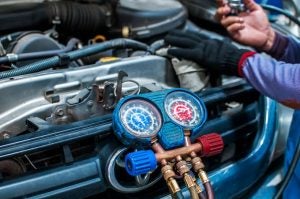
Car AC Repair Near Me in Junction City, KS: Why Is My AC Not Blowing Cold? A weak air conditioner is annoying in April. In August in Kansas, it can dominate the entire drive. You start the vehicle after it has been sitting in the sun. The fan comes on. Air moves through the vents. But it never really gets cold. Or it cools while you are moving and becomes warm at a stoplight. Maybe one side of the cabin feels different from the other. Maybe the system makes a noise it did not make last summer. That is usually when the search begins: Car AC repair near me. Air-conditioning problems can have several causes, which is why adding refrigerant without diagnosis is not always the correct solution. The first step is understanding what the system is doing differently. Why Is My Car AC Blowing Warm Air? Warm air can result from several conditions. Possible areas that may require diagnosis include refrigerant level, leaks, compressor operation, electrical components, sensors, airflow, condenser performance, or other parts of the climate-control system. The important point is that "not cold" is a symptom. It is not a diagnosis. A technician needs to determine why the system is not cooling properly before the correct repair can be recommended. Does My Car Just Need an AC Recharge? Maybe. But refrigerant is part of a closed system. If refrigerant is low, the more useful question may be why. Simply adding refrigerant without investigating a leak can provide temporary improvement while leaving the underlying problem unresolved. Professional AC diagnosis can help determine system condition before parts or refrigerant are added unnecessarily. Why Does My AC Get Warmer When I Stop? Drivers sometimes notice that AC performance changes between highway driving and sitting still. Airflow through the condenser, cooling fan operation, system pressures, ambient temperature, and other factors can affect performance. Tell the technician exactly when the problem occurs. "It does not work" provides less diagnostic information than: "It gets cold on I-70 but becomes warm when I sit at a light." Patterns help diagnosis. Why Is the AC Cold on One Side and Warm on the Other? Vehicles with dual-zone or multi-zone climate control have additional components that manage temperature in different parts of the cabin. A left-versus-right temperature difference can involve airflow doors, actuators, sensors, refrigerant-related conditions, or other climate-control components. Again, diagnosis matters more than guessing. Why Is My AC Making a Strange Noise? New sounds should be reported when scheduling service. Clicking behind the dashboard, squealing from the engine compartment, unusual fan noise, or other sounds can help point technicians toward the affected area. Do not assume every AC noise means the compressor has failed. The climate-control system includes multiple mechanical and electrical components. Why Does My Car Smell Strange When the AC Is On? Odors from the vents can have several causes. Moisture, debris, cabin filtration, biological growth, or other conditions may contribute to unpleasant smells. A burning smell is a different concern and should be taken more seriously because electrical or mechanical problems may be involved. Describe the odor accurately when speaking with a service advisor. Can a Dirty Cabin Air Filter Make My AC Feel Weak? A restricted cabin air filter can reduce airflow through the vents. That can make the air-conditioning system feel less effective even if the air itself is cold. Cabin filter replacement intervals and conditions vary by vehicle and environment. Kansas dust, gravel-road use, pollen, and other conditions can influence how quickly a filter becomes dirty. Check the maintenance information for your vehicle and have the filter inspected when airflow becomes noticeably weaker. Can Extreme Kansas Heat Affect AC Performance? Yes. A vehicle that has been sitting in direct sunlight can begin with an extremely hot cabin, dashboard, seats, glass, and interior surfaces. The AC system must remove that accumulated heat before the cabin becomes comfortable. That means cooling can take longer on a very hot afternoon than on a mild morning. But a system that consistently cannot produce properly cooled air may still need inspection. Should I Run the AC Before Deciding It Is Broken? Give the system a reasonable opportunity to cool the cabin, particularly after the vehicle has been sitting in direct sun. Opening the doors briefly or allowing extremely hot air to escape can help reduce the initial heat load. Then operate the climate control normally. If vent temperature remains warm or system behavior is clearly different from normal, schedule an inspection. Can Engine Cooling Problems Affect Air Conditioning? Vehicle systems do not operate entirely in isolation. If the engine is overheating or the vehicle has another cooling-system problem, AC operation may be affected or reduced as the vehicle attempts to protect itself. An overheating engine is more urgent than cabin comfort. If the temperature gauge is unusually high or a temperature warning appears, address the engine cooling concern immediately. Can an Electrical Problem Stop the AC From Working? Yes. Modern climate-control systems use electrical circuits, modules, sensors, switches, relays, actuators, and other electronically controlled components. That is another reason why "AC recharge" should not automatically be the first repair. If the problem is electrical, adding refrigerant will not solve it. Why Proper AC Diagnosis Matters Good diagnosis prevents parts replacement from becoming trial and error. The service process may include evaluating system operation, temperatures, pressures, airflow, electronic data, compressor behavior, and other conditions depending on the vehicle and symptom. The repair should follow what testing reveals. This is the same principle that applies to check engine lights, brakes, and other automotive systems. Diagnose first. Repair second. Where Can I Find Car AC Repair Near Me in Junction City? Valor Auto Group provides automotive maintenance, diagnostics, and repair through its Junction City service operations. Because specific AC repair needs can vary by make, model, and system, contact the service department with the vehicle information and symptom when scheduling. Valor's service operations are located at 1825 Goldenbelt Boulevard in Junction City. You can start through the Valor Auto Group Service & Parts page. Can I Bring My Vehicle to Valor if I Did Not Buy It There? Yes. Valor Auto Group's service information states that customers can bring vehicles for service even when the vehicle was purchased elsewhere. That makes the service department an option for new Junction City residents, Fort Riley families, Manhattan-area drivers, and used-vehicle owners. Does My Vehicle Have to Be a Ford, Jeep, Ram, Chrysler or Dodge? Valor specializes in the brands represented by its Ford and CDJR operations, but the group's service information also states that it can assist with vehicles outside those brands. For specialized work, contact the service department with the exact year, make, model, and symptoms to confirm available service. How Can I Help My AC Work Better in Summer? You cannot maintenance-hack your way around a mechanical failure, but a few habits can reduce cabin heat and help the system work more efficiently. Use shade when practical Use a windshield sunshade Allow extremely hot cabin air to escape briefly before cooling Keep the cabin air filter maintained Pay attention when cooling performance changes Do not ignore engine overheating The most important habit is noticing deterioration early. An AC system that gradually becomes less effective is giving you useful information. Questions Drivers Ask About Car AC Repair Near Me Where can I find car AC repair near me in Junction City, KS? Valor Auto Group provides automotive maintenance, diagnostic, and repair services through its Junction City Ford and CDJR service operations at 1825 Goldenbelt Boulevard. Because air-conditioning repairs can range from refrigerant-related concerns to electrical, airflow, compressor, sensor, or other climate-control problems, contact the service department with your year, make, model, and symptoms before scheduling. Junction City also has independent automotive repair businesses that provide AC work. The important factor is choosing a facility capable of diagnosing the system rather than simply adding refrigerant without determining why cooling performance changed. Why is my car AC not blowing cold? Possible causes include refrigerant loss, leaks, compressor issues, electrical problems, cooling-fan concerns, airflow restrictions, sensors, climate-control components, or other system faults. Because several problems can create the same warm-air symptom, diagnosis should come before repair. Tell the technician whether the AC is always warm, cools only while driving, changes with engine speed, works differently from one side of the cabin to the other, or produces unusual sounds. Those details can help narrow the diagnostic process. How do I know if my car AC needs refrigerant? Low refrigerant can reduce AC performance, but warm air alone does not prove that refrigerant is the problem. A technician can evaluate system pressures, temperatures, and operation to determine whether the refrigerant charge is incorrect. If the system is low, the next question is whether a leak is present. Refrigerant should not normally disappear simply because summer arrived. Proper diagnosis helps avoid repeatedly recharging a system without addressing the reason refrigerant was lost. Why does my AC work while driving but not when stopped? Vehicle speed changes airflow across components at the front of the vehicle. Cooling fan operation, condenser performance, refrigerant pressures, outside temperature, and other system conditions can therefore affect how the AC behaves at idle compared with highway speed. This pattern is useful diagnostic information. Tell the service advisor if the AC becomes noticeably warmer in traffic but cools again after the vehicle starts moving. Do not assume the problem automatically requires a compressor or recharge until the system has been tested. Can a cabin air filter cause weak AC? A dirty or restricted cabin air filter can reduce the amount of air moving through the vents. That can make the climate-control system feel weak even if the air passing through it is cold. Filter condition can be affected by mileage, dust, pollen, gravel-road driving, and environmental conditions. The cabin filter is only one possible cause of poor airflow, so replacement should be based on inspection and the vehicle's maintenance guidance. If fan speed sounds normal but very little air reaches the cabin, mention that symptom when scheduling service. Should I keep driving if my AC stops working? An AC failure by itself does not necessarily make a vehicle unsafe to drive, but the reason for the failure matters. If the AC problem occurs with engine overheating, warning lights, unusual odors, smoke, electrical problems, or other serious symptoms, stop and seek professional guidance. Engine temperature is particularly important. If the engine is overheating, continuing to drive can cause significant damage. If the only symptom is reduced cabin cooling and the vehicle otherwise operates normally, schedule diagnosis so the system can be inspected before the problem becomes more complicated. Do Not Wait Until the Hottest Day of the Year to Diagnose Weak AC Air-conditioning problems tend to become impossible to ignore at exactly the wrong time. The cabin is hot. The vehicle has been sitting in the sun. You have passengers. You are heading toward Manhattan or getting onto I-70. If cooling performance has changed, diagnose the problem before another Kansas heat wave makes it urgent. Valor Auto Group provides automotive service and repair in Junction City for customers throughout Junction City, Fort Riley, Manhattan, and Central Kansas. You can also review current service and parts specials or contact Valor Auto Group about your vehicle's service needs.
2026 Ford F-150 vs Ram 1500 | Junction City, KS

2026 Ford F-150 vs Ram 1500: Which Truck Is the Better Fit for Central Kansas? Most truck comparisons start by trying to declare a winner. That is not especially useful when the dealership writing the comparison sells both trucks. At Valor Auto Group in Junction City, Kansas, shoppers can compare the 2026 Ford F-150 and 2026 Ram 1500 without starting with a brand loyalty test. Both are serious full-size pickups. Both offer multiple engines, trims, four-wheel-drive configurations, towing technology, work capability, and increasingly premium interiors. The more useful question is what kind of truck owner you are. A contractor hauling equipment around Geary County may prioritize something completely different from a Fort Riley family towing a camper. A driver making regular trips between Junction City and Manhattan may care more about cabin comfort and technology. Someone pulling a boat toward Milford Lake may put trailer equipment near the top of the list. That is why the F-150 versus Ram 1500 decision should start with the job you expect the truck to perform. What Is the Biggest Difference Between the Ford F-150 and Ram 1500? The biggest difference may be philosophy rather than a single specification. Ford gives F-150 shoppers an unusually broad collection of powertrain and productivity choices, including EcoBoost engines, an available V8, and the available PowerBoost full hybrid. Ford also continues to build technology around how owners actually use the bed, trailer, cab, and available onboard electrical power. Ram approaches the full-size truck from another direction. The 2026 Ram 1500 offers the Pentastar V6, Hurricane inline-six engines, and the return of the available 5.7-liter HEMI V8. Ram also puts considerable emphasis on interior refinement, power, towing technology, and a wide trim range that stretches from work-focused configurations into genuinely premium trucks. Neither philosophy is inherently better. They simply give buyers different ways to build a half-ton pickup. Valor shoppers can compare current trucks through the new Ford and CDJR inventory at Valor Auto Group. Which Truck Gives You More Engine Choices? Both trucks give buyers meaningful options. The 2026 Ford F-150 lineup includes engines such as the 2.7-liter EcoBoost V6, 3.5-liter EcoBoost V6, 5.0-liter V8, and 3.5-liter PowerBoost full hybrid, depending on trim and configuration. The PowerBoost is particularly interesting because it combines gas and electric power rather than forcing a truck buyer into a conventional gas-versus-electric decision. Ford rates the available PowerBoost at 420 horsepower, with substantial torque for truck use. Ram offers a different mix. The 2026 Ram 1500 lineup includes the 3.6-liter Pentastar V6 with eTorque, the 3.0-liter Hurricane inline-six, a higher-output Hurricane on select configurations, and the returning available 5.7-liter HEMI V8 with eTorque. For traditional V8 shoppers, that HEMI return is significant. For buyers interested in turbocharged output, the Hurricane engines give Ram another strong direction. Should You Choose the F-150 PowerBoost Hybrid? The PowerBoost makes the strongest case for buyers whose truck has multiple jobs. It provides full-size truck power while also allowing Ford to integrate available Pro Power Onboard functionality that can provide usable electrical power from the truck. That can matter for contractors, property owners, campers, tailgaters, and anyone who regularly needs electrical power away from a traditional outlet. For a Junction City homeowner doing projects on the weekend, that may have real value. For someone who never needs portable electrical power, it may rank much lower. This is exactly why truck shopping should be use-driven. A feature is valuable when it solves a problem you actually have. What Does the Ram 1500 Hurricane Engine Bring to the Comparison? The standard-output 3.0-liter Hurricane engine gives the Ram 1500 a strong combination of horsepower and torque, while the high-output version pushes performance substantially higher on compatible trims. That makes the Hurricane especially interesting for drivers who want turbocharged power but do not necessarily want a hybrid system. Ram also brought the 5.7-liter HEMI V8 back for 2026, giving traditional truck buyers another choice. Instead of one obvious engine hierarchy, Ram now gives shoppers several different personalities. The right one depends on towing, payload, fuel expectations, trim, and the way the truck will be driven. Which Truck Is Better for Towing? This is where buyers need to be careful with headline numbers. Maximum towing capacity does not apply to every truck on the lot. Towing capacity changes with engine, cab, bed, drivetrain, axle ratio, equipment, payload, passengers, and other factors. The 2026 Ram 1500 can reach a maximum available towing capacity above 11,000 pounds in properly equipped configurations. Ford also offers substantial towing capability across the F-150 lineup, with the exact maximum depending on configuration. But most truck owners should not shop for the largest number available. They should shop for their trailer. Ask: What does the trailer weigh loaded? How much tongue weight will it place on the truck? How many passengers normally travel with it? What cargo goes in the bed? How often will you tow? Will you tow primarily on I-70 or also on rural roads and boat ramps? Then select the truck configuration that comfortably supports the actual load. Which Truck Has Better Towing Technology? Both manufacturers have invested heavily in making trailer use less intimidating. Ford offers available features such as Pro Trailer Backup Assist and Pro Trailer Hitch Assist on compatible F-150 configurations. These systems are designed to help with tasks that can be frustrating even for experienced truck owners, particularly backing and hitch alignment. Ram offers available towing technology of its own, including features designed to assist with hitch alignment, trailer visibility, and towing awareness depending on configuration. Technology should not replace knowing how to tow safely. But if you tow frequently, equipment that reduces the repetitive frustration of hitching, backing, and monitoring a trailer can have more ownership value than an interior feature you rarely use. Which Truck Is Better for Work? The answer depends on the work. An F-150 with available Pro Power Onboard may be especially appealing when electrical tools or equipment need power at a remote location. A Ram 1500 configuration may appeal more strongly to another buyer because of its engine choice, payload configuration, cab, or interior. A landscaping company, construction contractor, salesperson, property manager, and farmer can all say they need a "work truck" while describing completely different jobs. Do not shop for a work truck until you define what work means. Which Truck Has the Better Interior? This is one of the most subjective parts of the comparison. Ram has built a strong reputation around truck interiors, particularly as you move into upper trims. The 2026 Ram 1500 can be configured with substantial screen area, premium materials, advanced technology, and luxury-oriented features. Ford has also moved the F-150 far beyond the traditional basic pickup cabin. Depending on trim, F-150 shoppers can find large displays, advanced connectivity, premium audio, work-oriented cabin solutions, available BlueCruise hands-free highway driving, and numerous convenience features. The important question is not which dashboard photographs better. Sit in both. Adjust the seat. Use the controls. Check rear-seat room. Look at storage. Imagine spending two hours driving west on I-70. The better cabin is the one you want to spend time in. Which Truck Makes More Sense for Junction City and Fort Riley Families? Full-size pickups increasingly serve as family vehicles. That means rear-seat room, child-seat access, storage, ride comfort, highway technology, and everyday convenience can matter just as much as the bed. If the truck will carry children or adult passengers regularly, compare Crew Cab configurations directly. Do not assume every truck cab offers the same amount of usable passenger room. Then look at how family cargo interacts with truck cargo. Groceries, backpacks, luggage, coolers, sports gear, tools, and outdoor equipment all need somewhere to go. A truck that handles both sides of that equation can become much more useful than one purchased solely around towing capacity. Which Truck Makes More Sense for Milford Lake Weekends? Both can make excellent recreational trucks. The decision comes down to what you bring. Fishing gear, coolers, bikes, camping equipment, boats, personal watercraft, and trailers all create different requirements. If towing is central to your weekends, compare the exact tow equipment. If the bed carries most of the gear, compare bed length, access, tie-down solutions, covers, and available bed features. If family members ride along, compare cabin space and comfort. Again, the winner changes with the owner. Should You Buy an F-150 or Ram 1500 Based on Price? Price matters, but trim-to-trim comparison matters more. A basic work-oriented truck should not be compared financially with a premium truck loaded with technology and luxury equipment. Start with the equipment you actually need. Then compare: Vehicle price Current incentives Trade value Financing Insurance Expected fuel cost Maintenance How long you plan to own the truck Valor Auto Group's Finance Department and Value Your Trade tool can help shoppers evaluate more than sticker price. Questions Central Kansas Truck Buyers Ask About the F-150 and Ram 1500 Is the 2026 Ford F-150 better than the 2026 Ram 1500? Neither truck is universally better. The F-150 may be more appealing to shoppers interested in Ford's broad engine selection, available PowerBoost hybrid, Pro Power Onboard, towing technology, and other productivity features. The Ram 1500 may be more attractive to buyers who prefer its Hurricane engines, returning HEMI V8 option, interior approach, available technology, or particular trim lineup. The correct answer depends on towing, payload, passenger requirements, budget, comfort preferences, and how the truck will actually be used. Because Valor Auto Group represents both Ford and Ram, Junction City shoppers can compare the two without needing to choose a dealership before choosing the truck. Does the 2026 Ram 1500 have a HEMI V8? Yes. The available 5.7-liter HEMI V8 with eTorque returned to the Ram 1500 lineup for the 2026 model year. Ram also offers the Pentastar V6 and 3.0-liter Hurricane inline-six engines in different configurations. That gives Ram buyers several distinct powertrain choices. A shopper who specifically wants V8 character may place the HEMI high on the list, while someone prioritizing turbocharged torque may prefer the Hurricane. Compare the exact engine against your towing, payload, fuel, and driving needs rather than choosing solely because of cylinder count. Does the Ford F-150 still offer a V8? Yes. Ford continues to offer a 5.0-liter V8 in compatible 2026 F-150 configurations. Ford also offers EcoBoost V6 engines and the available PowerBoost full hybrid. That variety is one of the F-150's biggest strengths because different buyers can configure the same truck family around very different priorities. Traditional V8 buyers, turbocharged-engine buyers, and hybrid truck shoppers can all remain within the F-150 lineup. Availability depends on trim and configuration, so verify the exact truck before purchase. Which truck is better for towing a camper in Kansas? Either truck may be appropriate depending on the camper. Start with the camper's loaded weight and tongue weight, then account for passengers and cargo. Compare those requirements against the exact truck's towing and payload ratings. Do not rely on the manufacturer's maximum headline number unless the truck you are considering is actually configured to achieve it. Trailer brake equipment, hitch technology, mirrors, drivetrain, axle ratio, and towing frequency also matter. If your camper travels regularly on I-70 or to recreation areas around Central Kansas, cabin comfort and towing technology can become meaningful parts of the decision as well. Which truck is better for a family? Both can work extremely well as family trucks when configured with the appropriate cab. Compare rear-seat room, child-seat access, storage, ride comfort, technology, and how easily the truck handles everyday errands in addition to towing or hauling. If the truck will be the primary family vehicle, spend more time evaluating the cabin than you would for a dedicated work truck. A truck can have outstanding capability and still be the wrong family fit if passengers are uncomfortable or the configuration creates daily frustration. Where can I compare a Ford F-150 and Ram 1500 in Junction City? Valor Auto Group in Junction City represents both Ford and Ram, allowing Central Kansas shoppers to compare the two full-size pickups through one automotive group. Shoppers can research current inventory online, compare equipment and configurations, evaluate a trade, and speak with the Valor team about the differences that matter to their particular use. This is especially useful for buyers who have not already decided which brand they prefer. Start with the job you need the truck to perform, then compare which configuration best accomplishes it. F-150 or Ram 1500? Start With the Job, Not the Badge The Ford F-150 and Ram 1500 are both strong trucks because they do not force every buyer into the same configuration. That is also what makes the decision difficult. Define your trailer. Define your cargo. Define your passengers. Define your work. Define the technology you will actually use. Then compare the trucks. Valor Auto Group makes that process easier because Ford and Ram shoppers can begin with the same new vehicle inventory, review current new vehicle specials, or contact the Valor team to narrow down the right truck.

The RAM 1500 Is Worth The Buy In Midwest!

How Much Truck Do You Really Need When Most of Your Miles Are Ordinary? Do you need a full-size truck if you are not pulling a trailer every weekend? That question comes up often because truck shopping has a strange habit of focusing on the most extreme thing a vehicle can do. Maximum towing gets attention. Payload numbers get attention. Horsepower gets attention. But most owners are not towing at maximum capacity on Tuesday morning. They are driving to work. They are traveling between Junction City and Manhattan. They are moving through Fort Riley traffic. They are picking up groceries, taking children to activities, carrying tools, loading bags, stopping at the hardware store, and occasionally doing something that reminds them why they wanted a pickup in the first place. That makes the long-term ownership question around the 2026 Ram 1500 more interesting than simply asking how much it can tow. The real question is whether having full-size truck capability available all year creates enough everyday value to justify owning the truck during the many days when you are not asking much from it. Scenario One: The Driver Who Uses a Truck Bed More Than a Trailer Hitch Consider a Junction City homeowner who commutes most days but tackles projects on weekends. The truck might spend Monday through Thursday carrying little more than a backpack and coffee cup. Friday evening could involve lumber, bags of mulch, tools, or a piece of furniture. Spring may bring landscaping. Fall could mean yard cleanup. A move, home repair, or family project can suddenly create a need for cargo space that does not belong inside an SUV. This owner does not need maximum towing capacity every day. What they value is independence. There is no need to borrow a truck. There is no rental counter. There is no carefully wrapping dirty supplies before placing them inside a passenger vehicle. There is no second trip because something did not fit. This is one of the least discussed benefits of owning a full-size pickup. The truck bed turns dozens of small logistical problems into non-events. You can view the current new Ford and CDJR inventory in Junction City to see how different Ram 1500 configurations compare with the other trucks and vehicles available through Valor Automotive Group. Scenario Two: The Owner Who Tows Only Six or Seven Times a Year Now imagine someone who pulls a boat, utility trailer, camper, or recreational equipment only occasionally. On paper, that can make buying a truck seem excessive. If towing occurs only a handful of weekends per year, why own the capability for the other fifty weeks? The answer depends on how important those weekends are. If pulling equipment to Milford Lake is part of how your family spends summer, the ability to tow confidently may be central to the ownership decision even if the actual mileage is relatively small. The same applies to someone who moves equipment for work several times per year or owns a trailer used primarily during a particular season. The value of capability cannot always be measured by frequency. A fire extinguisher is rarely used, but that does not make having one pointless. Truck capability works differently, but the ownership principle is similar. Some tools are valuable because they are available exactly when the situation requires them. The 2026 Ram 1500 lineup offers multiple powertrain options and significant available capability, which is why buyers should match equipment to their actual trailer and payload needs rather than simply choosing the largest published number. Shoppers who want to research Ram alongside other Chrysler, Dodge, Jeep, and Ram vehicles can also visit the Valor Automotive Group CDJR Research Hub. Scenario Three: The Family That Wants a Truck but Refuses to Give Up Comfort This is where modern full-size trucks have changed the conversation most. A pickup no longer needs to be treated as the uncomfortable vehicle the family tolerates because somebody needs a bed. Crew cab trucks have become legitimate family vehicles, and the Ram 1500 has built much of its reputation around combining capability with a more polished cabin experience. For someone driving from Junction City to Manhattan for a Kansas State event, traveling east on I-70, or spending an hour in the vehicle with children or other adults, comfort is not secondary. It is part of the truck's usefulness. A vehicle that handles a trailer well but makes every ordinary highway trip unpleasant is difficult to justify as your only vehicle. A full-size truck becomes much easier to own when passengers are comfortable, storage is useful, technology is easy to access, and the cabin feels appropriate for a long drive. The Long-Term Ownership Test Is Different From the Test-Drive Test A ten-minute test drive can tell you whether you like the seating position, acceleration, steering, and general feel. It cannot tell you whether the truck will make sense three years from now. Long-term ownership requires thinking ahead. Will your family grow? Are you likely to buy a boat, trailer, camper, or property? Will home projects become more frequent? Could your work needs change? Will you regularly carry pets, equipment, sports gear, or outdoor supplies? Do you expect more road trips? Are you buying enough truck for the life you are likely to have, or too much truck for the life you actually live? Those questions matter because replacing a vehicle after two years because your needs changed can be more disruptive than choosing carefully the first time. When Full-Size Truck Ownership Is Probably More Than You Need There is also a point where the honest answer is that a Ram 1500 may be more vehicle than your lifestyle requires. If you never tow, rarely haul bulky items, spend nearly all of your time commuting, strongly prioritize fuel expense and easy parking, and do not expect those needs to change, a smaller vehicle may create better everyday value. That is not a criticism of the truck. It is simply matching the tool to the job. One of the advantages of shopping through Valor Automotive Group is that you do not have to force every lifestyle into a pickup. The group's new vehicle inventory includes Ford, Chrysler, Dodge, Jeep, and Ram vehicles for drivers whose priorities may ultimately point in another direction. Why Ride Comfort Changes the Ownership Equation When people calculate whether they need a truck, they tend to count tasks. They rarely count hours. Suppose you tow a trailer ten times in a year but spend 400 hours driving without one. The comfort, noise level, seat quality, storage, technology, and general road behavior during those 400 hours may influence your satisfaction more than the towing experience does. This is why long-term truck ownership should be evaluated as an entire lifestyle rather than a capability checklist. Ram offers trims that range from straightforward work-oriented configurations to increasingly premium interiors. A buyer who spends a large amount of time commuting may reasonably place more weight on cabin features than someone whose truck spends most of its life on a jobsite. Neither shopper is using the truck incorrectly. They simply need different versions of it. What Kansas Roads Teach You About Truck Ownership Junction City is a useful place to own a pickup because normal driving varies more than many people realize. You can move from city streets to I-70 quickly. K-18 connects drivers toward Manhattan. Rural routes and gravel roads are never far away. Milford Lake creates recreational towing and cargo needs. Fort Riley creates a constant flow of work-related commuting. Wind, thunderstorms, snow, ice, heat, and rapid temperature changes all become part of the ownership cycle. A full-size truck is comfortable in that variety because it is designed around a broad range of use. That does not automatically make it the right choice, but it explains why so many owners use trucks for far more than traditional work. How Much Capability Should You Actually Buy? This is where smart truck shopping becomes technical enough to matter. Do not choose your configuration based on a maximum advertised towing number. Your actual capability depends on the specific engine, drivetrain, cab, axle, equipment, payload, passengers, cargo, and trailer setup. Start with your real trailer weight. Add the people and cargo you expect to carry. Consider how often you tow, where you tow, and how much margin you want. Then choose the truck. Manufacturers offer impressive maximum figures, but the number attached to your particular configuration is the one that matters in actual ownership. Valor Automotive Group can help shoppers compare configurations through its contact team, while buyers who want to understand the financial side first can explore the Finance Department or begin through the dealership group's online pre-approval process. Do Not Forget the Cost of Keeping a Truck Long-term value is broader than purchase price. Fuel, tires, routine maintenance, insurance, repairs, registration, financing, and depreciation all matter. Larger wheels and specialized tires can change replacement costs. How much you drive affects fuel expense. How hard you use the truck affects service needs. At the same time, ownership can create economic benefits that are harder to put into a spreadsheet. A truck might eliminate trailer rentals, delivery charges, vehicle rentals, second trips, or lost time. Business owners may use it directly for revenue-producing work. Homeowners may avoid paying others to perform tasks they can now handle themselves. The correct calculation is personal. For routine maintenance, owners can learn about Valor Automotive Group service and parts, review current service and parts specials, and compare available new vehicle specials while shopping. A Better Way to Decide Whether You Need a Ram 1500 Instead of asking, "Do I tow enough to justify a truck?" try five different questions. How often does my current vehicle prevent me from doing something easily? How much value would I get from having an open bed available every day? Will my towing or hauling needs grow during the next several years? Can this truck comfortably replace my current daily vehicle? Do the benefits I will use occasionally matter enough to justify the costs I will pay continually? That is a more complete ownership framework. The Ram 1500 makes sense when the total package improves enough areas of your life to justify its size and operating costs, not when you can simply point to one impressive specification. Questions Junction City Drivers Ask About Owning a Ram 1500 Is a Ram 1500 worth buying if I rarely tow? It can be, because towing is only one reason to own a pickup. Many owners receive more frequent value from the open bed, passenger space, ground clearance, all-weather confidence, storage, and ability to handle home or work projects. The important question is whether those benefits appear often enough in your routine to justify owning a full-size truck. A homeowner who carries landscaping supplies, furniture, tools, bikes, camping equipment, or dirty cargo may use the truck's utility every month without connecting a trailer once. Someone who only commutes and almost never carries bulky items may reach a different conclusion. Evaluate everything the truck changes about your life, not only the number of days per year when a trailer is attached. Can the Ram 1500 realistically replace a family SUV? For some households, especially those considering a crew cab configuration, it can. Modern full-size trucks offer substantially more passenger comfort and technology than older pickups, which makes them viable as everyday family vehicles. The question comes down to how your family uses cargo space. An SUV provides enclosed cargo that is easy to access and protected from weather. A truck provides an open bed that can carry larger, dirtier, or taller objects but may require a tonneau cover or other storage strategy for luggage and groceries. Families who regularly tow, camp, handle projects, or carry recreational equipment may appreciate the truck's added flexibility. Families primarily carrying passengers and enclosed luggage may still prefer an SUV. Is a full-size truck difficult to use around Junction City? It is larger than a crossover or sedan, so parking and maneuvering require some adjustment, but Junction City is not an environment where a full-size pickup feels out of place. Many local roads, parking areas, regional highways, work sites, and recreational destinations routinely accommodate trucks. The more important issue is whether you personally enjoy driving a larger vehicle every day. Spend part of your test drive doing ordinary tasks. Park it. Back into a space. Drive through the routes you normally use. Turn into a shopping center. See how visibility feels. Technology can assist with maneuvering, but comfort with the vehicle's dimensions still matters. The right truck should feel manageable during routine life, not merely impressive during a dealership demonstration. How should I choose the right Ram 1500 engine? Start with your actual usage rather than choosing the engine with the highest output. The 2026 Ram 1500 offers multiple powertrain choices, and the right choice depends on towing weight, payload needs, driving patterns, performance expectations, budget, and how much reserve capability you want. Someone primarily commuting with occasional light hauling has a different requirement from someone regularly towing a heavy camper across Kansas. Calculate your realistic trailer and cargo requirements, then compare those needs against the ratings of the exact configuration you are considering. This approach typically produces a better ownership fit than starting with horsepower and working backward. What should I budget for besides the Ram 1500 payment? Include insurance, fuel, registration, maintenance, tires, expected repairs outside warranty coverage, accessories, and the potential cost of equipment such as a tonneau cover or towing hardware. Truck buyers should also consider how wheel and tire choices influence future replacement costs. Your annual mileage will heavily affect fuel expense. On the positive side, think about expenses the truck may eliminate, including delivery charges, trailer rentals, borrowed vehicles, or paying someone else to transport materials. A useful ownership budget looks at both sides of the equation. The least expensive vehicle to buy is not always the vehicle that creates the lowest total cost for your particular lifestyle, especially if a truck directly supports your work or property needs. How long should I expect to keep a Ram 1500? There is no ideal ownership period for every buyer. A better approach is to choose a truck that has enough flexibility to remain useful as your needs change. Think several years ahead when deciding on cab size, powertrain, towing equipment, passenger room, and technology. If you expect a growing family, future camper purchase, change in work responsibilities, or more frequent home projects, buying only for today's minimum requirement could lead to an earlier replacement. Routine maintenance also matters greatly in long-term satisfaction. Follow the appropriate service schedule, address problems early, maintain tires and brakes, and keep records. The goal is not simply to own the truck for a predetermined number of years. It is to avoid outgrowing it unnecessarily. The Right Amount of Truck Is the Amount You Will Actually Value A Ram 1500 does not have to spend every weekend attached to a trailer to justify its place in a driveway. Its value may show up in smaller ways. A Saturday hardware run. A trip to Milford Lake. A piece of furniture that fits without drama. A long family drive where everyone is comfortable. A work task you can handle yourself. A trailer you only pull a few times each summer. The smartest buyer is not the person who purchases the most capability. It is the person who understands exactly where capability fits into the rest of their life.

Contact Us

Fill out this form below and we'll contact you shortly
*Required Fields